


Maximum Thermal Efficiency: How Q Tape Aluminum FSK Tape Makes a Difference in HVAC Systems

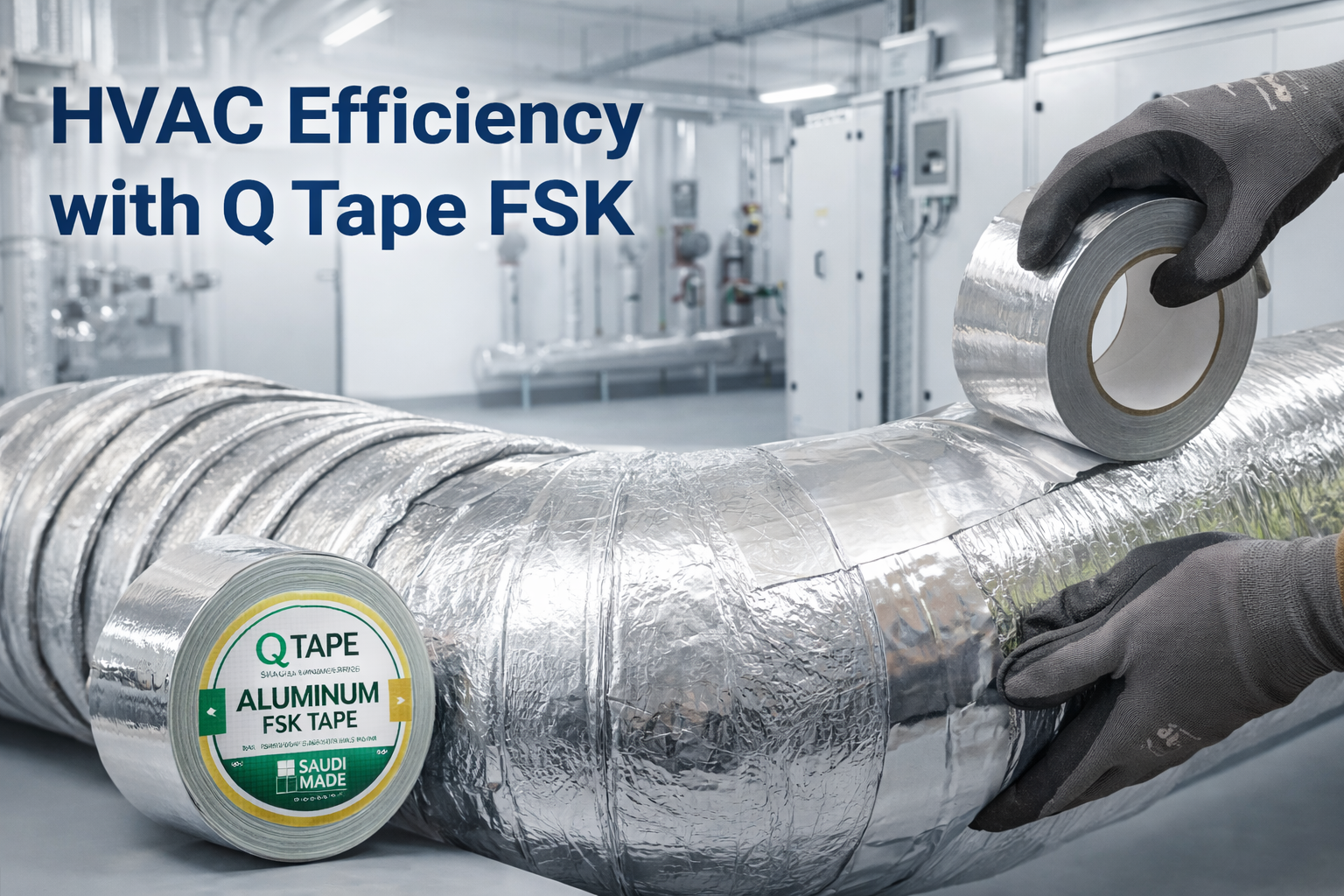
Heating, ventilation and air conditioning systems act as the lungs of a modern building. Any defect in the insulation of those systems leads directly to higher energy bills, condensation problems and reduced air quality. This is where Q Tape Aluminum FSK Tape stands out: an engineered solution designed specifically for the joints and seams where insulated duct systems are most likely to fail.
Where the energy actually escapes
A duct system is rarely lost at the middle of a straight run. It is lost at the joints — the transverse connections, the longitudinal seams, and every place where the insulation facing has been cut and then closed again. Each of those points is both an air path and a break in the vapour barrier.
Sealing them properly is one of the cheapest interventions available on a project: no additional plant, no additional controls, only the right tape correctly applied. Left open, the conditioned air that the chiller paid for leaks into a ceiling void, and warm humid air moves in the opposite direction towards a cold surface.
Engineering composition: three layers, three jobs
What distinguishes FSK tape is its laminated structure, which combines three materials:
- Foil backing — provides durability and acts as an effective vapour barrier, preventing moisture ingress into the insulation and protecting the system from corrosion and mould.
- Fibreglass scrim — gives the tape high tensile strength and resistance to tearing and puncture, keeping it dimensionally stable during installation and in service.
- Kraft paper — reinforces the laminate and matches the facing material used on most faced duct wrap and insulation board.
All three layers are coated with a high-strength solvent acrylic adhesive, chosen because it holds its properties across a wide temperature range instead of softening and creeping the way many rubber-based adhesives do in heat.
What the data sheet proves
Marketing language is easy to write. These are the tested figures behind the product:
| Property | Value | Test method |
|---|---|---|
| Total thickness | 180 microns (7.1 mils) | PSTC-133 / ASTM D 3652 |
| Tensile strength | 197.01 N/25mm (45.0 lbf/in) | PSTC-131 / ASTM D 3759 |
| Elongation | 2% | PSTC-131 / ASTM D 3759 |
| Adhesion to steel | 23.2 N/25mm (85.0 ozf/in) | PSTC-101 / ASTM D 3330 |
| Initial adhesion | 8.5 cm | PSTC-6 / ASTM D 3121 |
| Holding power | No falling off in 24 h | PSTC-107 / ASTM D 3654 |
| Application temperature | −12 °C to 120 °C | ASTM C1136 |
| Service temperature | −30 °C to 120 °C | ASTM C1136 |
| Flame spread / smoke developed | 0 / 0 | ANSI/UL723 & UL724 |
Performance that survives extreme temperatures
In an environment with severe thermal swings, stability is everything. The tested service range of −30 °C to 120 °C means the tape does not lose its adhesive properties in a chilled plant room, and does not soften and release on a rooftop duct in summer.
Just as important is the elongation figure of 2%. A tape that barely stretches does not creep as the duct expands by day and contracts by night. Over years of thermal cycling, that is the difference between a joint that stays closed and one that slowly opens at the edges.
The vapour barrier nobody sees
In humid coastal conditions the risk is not that cold air escapes; it is that warm moist air arrives. Wherever it reaches a cold surface it condenses, and once water is inside the insulation it does not leave. Thermal performance drops, and corrosion begins on surfaces that will not be inspected again for years.
The insulation manufacturer supplies a facing precisely to stop this. The installer then cuts that facing at every joint. FSK tape is what restores it — which is why the tape should be selected to match the facing rather than picked from whatever is on the shelf.
Fire performance for plenums and shafts
Any material installed inside a plenum has to answer for its surface burning characteristics. Q Tape Aluminum FSK tape returns a flame spread index of 0 and a smoke developed index of 0 to ANSI/UL723, and the FSK product is UL certified to that standard. When a consultant reviews a material submittal, this is usually the first line they look for.
The performance you lose through poor application
Even the best tape fails if it is applied over dust, stretched into place, or never pressed down. Pressure-sensitive adhesive bonds by flowing into the surface it touches, and it cannot flow into sand or moisture. Our step-by-step guide to sealing duct joints and seams correctly covers the seven steps that protect the performance you paid for.
FSK or plain foil?
Both have a place on the same project: FSK for straight runs on faced insulation where stability and the vapour barrier matter, plain aluminium foil tape for elbows, take-offs and irregular fittings where conformability wins. The full comparison, with both data sheets side by side, is in FSK tape vs aluminum foil tape. If you are new to the product, start with what FSK tape actually is.
Specifying it on your project
Q Tape Aluminum FSK Tape is manufactured in the Kingdom of Saudi Arabia and supplied directly to projects and distributors. The complete data sheet is published on the Aluminum FSK Tape product page. Send us the widths, lengths and quantities you need and our team will come back with a quotation; samples can be supplied where a consultant requires approval before purchase.